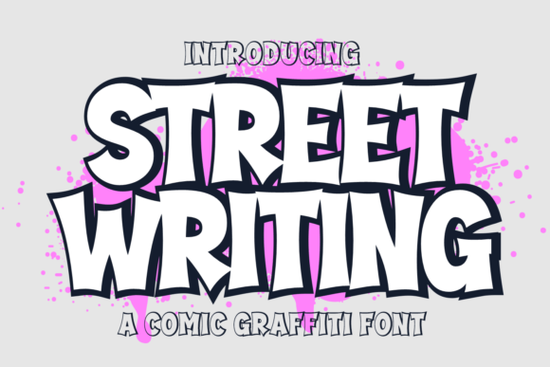
If you're looking for a bold, playful font that brings street energy to posters, product labels, or social media graphics, the Street Writing Font is a solid choice especially if your work leans into urban aesthetics, youth culture, or fun, hand-drawn vibes. It’s not just another graffiti-style typeface; it’s built with real design flexibility in mind, including two distinct versions (regular and extrude) and full character support. That means you can use it for everything from comic book speech bubbles to coffee bag labels without switching fonts mid-project.
Who actually uses this kind of font?
Small business owners printing custom tote bags or stickers often reach for something like Street Writing when they want their text to feel alive not sterile or overly polished. Print-on-demand sellers on Etsy or Redbubble use it for t-shirt designs aimed at teens and young adults who respond to expressive, energetic lettering. Comic artists sometimes drop it into title panels or cover art for quick visual punch. And crafters making DIY greeting cards or wall art appreciate how easily it pairs with markers, spray-paint textures, or collage elements.
What makes it different from other graffiti fonts?
Most graffiti-inspired fonts lean heavily into realism dripping paint, wild angles, or chaotic spacing which can make them hard to read at small sizes or tricky to pair with clean layouts. Street Writing strikes a middle ground: it keeps the cartoonish swagger and bold outlines, but with consistent spacing, clear letterforms, and smart kerning. That’s why it works well for logotypes even if your brand isn’t literally about street art, the font adds personality without sacrificing legibility.
The extrude version adds subtle 3D depth, giving you instant dimension for banners or packaging mockups. You don’t need Photoshop layers or manual shadows just switch to the extrude file and go. Both versions include uppercase, lowercase, numerals, and standard punctuation, so you’re covered whether you’re designing a festival poster (“Live Music • Sat • 8 PM”) or a limited-edition sneaker drop label (“Drop #42 • Only 100 Pairs”).
How does it fit with other popular display fonts?
If you already own Legacy College, you’ll notice how nicely Street Writing balances its vintage collegiate tone great for pairing in multi-font branding systems. For contrast, try layering it over something sleek like Steel Font in headlines and body copy. And if your mood board includes retro signage or 90s zine culture, Creative Vintage Font shares some of that handmade warmth but with more structure than Street Writing. Even playful options like Mario Font have a different rhythm; Street Writing feels looser, faster, and more improvisational.
Where do people commonly run into issues?
A few practical notes: Because of its bold weight and wide proportions, avoid using Street Writing for long paragraphs or tiny captions (under 16pt). It shines at 24pt and up especially on dark backgrounds where the outlines pop. Also, while it supports basic Latin characters, it doesn’t include extended diacritics (like ñ or ç), so double-check if you’re designing for bilingual audiences. And remember: always test how it renders on screen and in print some extrude effects soften slightly when converted to vector-only workflows.
For reference, you can see how designers are using similar styles across Creative Fabrica’s library like the Street Writing Font preview gallery, which shows real-world mockups on mugs, vinyl decals, and apparel.
What should you try first?
- Open both the regular and extrude files side-by-side in your design app.
- Type your brand name or tagline in both and compare how each feels at 36pt on a black background.
- Try setting a short phrase in Street Writing, then add a thin sans-serif (like Montserrat Light) underneath for contrast.
- Export a PNG and send it to a friend ask what emotion or vibe they associate with it before you finalize.
It’s worth noting: this font works best when it has room to breathe. Pair it with generous margins, high-contrast colors, and minimal supporting graphics. Less clutter means more impact and that’s where Street Writing really earns its place in your toolkit.
Learn More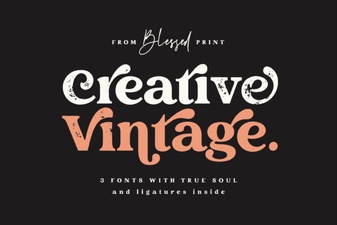 Classic Vintage Fonts for Creative Design Projects
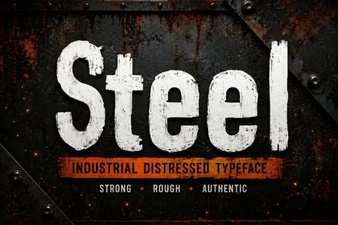 Steel Font Design for Bold Digital Interfaces
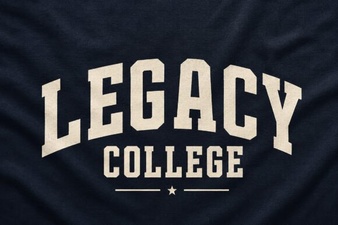 Legacy College Font: Design Tips & Project Ideas
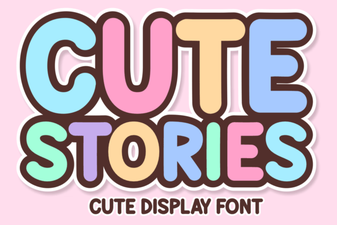 Cute Story Fonts for Your Creative Projects
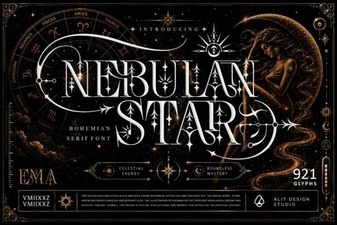 The Nebulan Font: Design for Galactic Projects
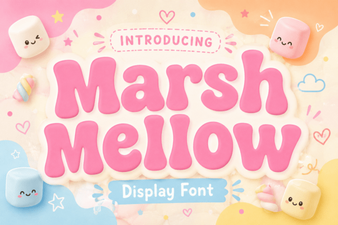 Marshmellow Font: a Playful Typography Guide